
- 作者:道扁道
- 来源:文化大观园
- 发布时间:2026-08-26
12306
男子捐赠3份清朝科举试卷 字体是标准馆阁体_我的网站

一 | 近日,浙江丽水,一男子捐赠三份清朝科举试卷。

二 |
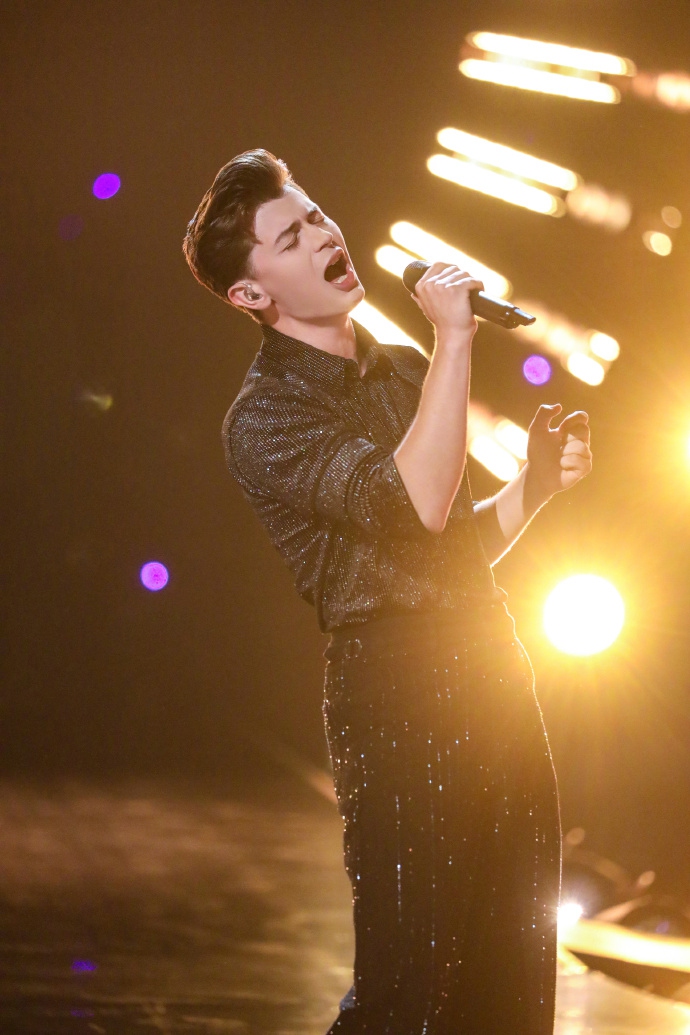
Elliot James Reay could have copied every other Western act and sung a Taylor Swift cover. Instead, he took 1950s rock'n'roll to a live TV show where autotune is switched off and discovered a version of fame that Britain has forgotten.
Elliot James Reay was traveling in the US, trying to finish a song, when his manager called. There was an invitation to join Singer 2026, a prime-time live music show in China. Reay didn't hesitate. He had traveled the world before he was a full-time musician, but had run out of money before reaching China. "I went everywhere but China," he said while sitting for an interview with the Global Times, sitting in the office of his label in Beijing, from which the Palace Museum can be seen not far away.
Reay is, in the West, a very 2020s kind of artist. He began posting short covers on short video platform TikTok in 2019; during the UK Covid lockdown, he chose to focus on growing his fan base. He now has millions of followers across platforms, and his debut single notched 10 million views before it was even released. In the British industry, this is both a leg-up and a trap. "You can have all the followers," he says, "but they don't guarantee people will buy tickets."
In China, that equation flipped.
Nervous again
The Chinese show, Singer 2026 is broadcast completely live, with no pitch correction. For Reay, who had played enough small gigs to feel comfortable in his own skin, it was a shock. "I haven't felt nerves in a long time," he says. "But I've never been in a competition before. To have my singing judged against other people made me really nervous."
He watched Week One's performances from the wings and saw why. "The standard was terrifying," he says.
But the format, he admits, is something the UK no longer has: a televised singing contest that treats vocal ability as a public event, not a pre-packaged product. "It made me feel like I just started my career again."
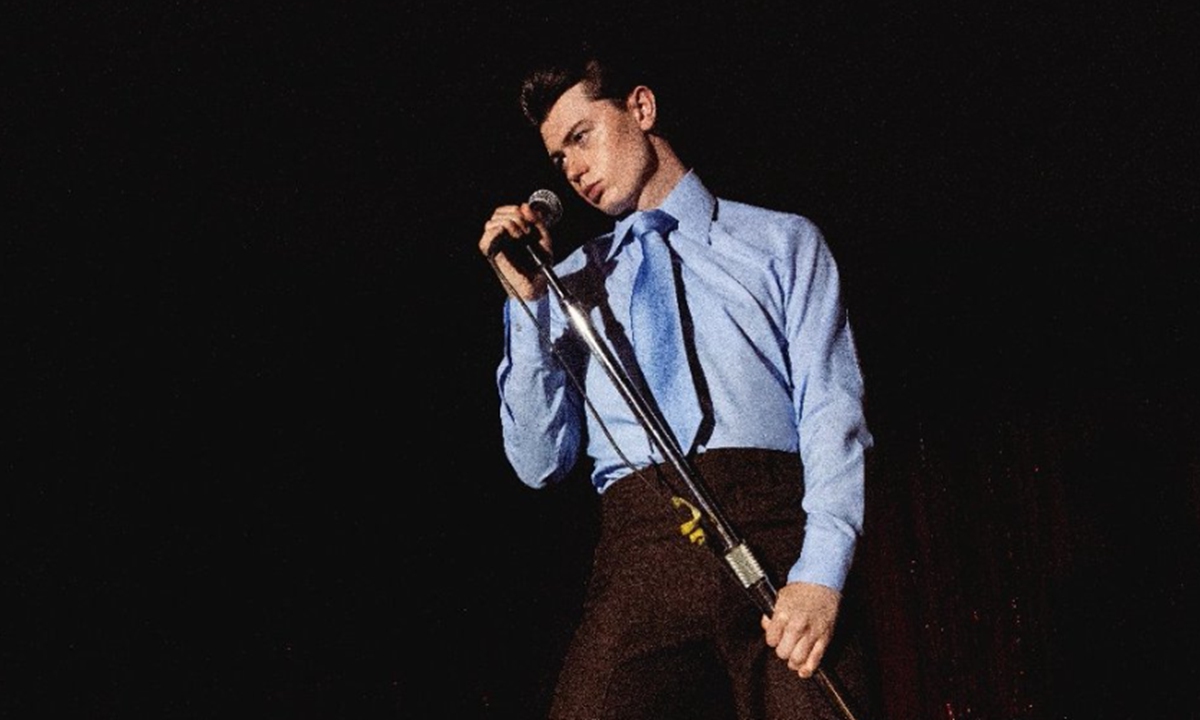
Reay's lane is retro. Not as pastiche, but as lineage. He wears the silhouette of Elvis Presley, sings in the grain of 1950s pop, and writes songs that sound like they were cut from a Sun Records demo. He could have sanded it down for Chinese audiences, but he didn't.
"Someone has to start the wave before you can see it," he says. Among the songs he performed were "Unchained Melody" and his original track "I Think They Call This Love," which he co-wrote with his girlfriend. He points out that the Beatles still sit next to Taylor Swift on the radio, and that pop started in the 50s. "It's the foundations of pop," he says.
Learning to feel the words
In the final, Reay performed a bilingual version of the Chinese song "Hou Hui Wu Qi" (The End of the World). It was his first time singing in another language. He spent five days learning the Chinese lyrics, listening to the original on loop.
"There are sounds in Chinese we just don't have in English," he says. "I couldn't hear the difference at first. I'd say it, and Helen (his translator) would say, 'No.' I thought I was saying the same thing." Eventually, he stopped trying to hear it and started trying to feel it. "It became more about how it felt to say it. How I place my tongue in my mouth," he says.
He didn't understand the meaning until day three. "Helen gave me a card with the Chinese characters and the English translation. It's very poetic," he says. The performance received a strong reaction, with it being called an attempt at "cultural fusion."
He had saved his own original, "I Think They Call This Love," co-written with his girlfriend, for the same final. He had held the song back deliberately. "I knew that any week was my last week," he says, "but I knew that if I made it to the grand final that I had to do it then." He had no idea it would become the last song of the entire show.
When he finished, he walked straight off stage, took his girlfriend's hand, and the two of them left together, a moment that trended on Chinese social media that night.
The song is about the exact point they realized they were in love; it was also the first track of his career he fully believed in and pushed into the world. Having her there to watch it live, after weeks of her only seeing performances on a phone in a hotel room, "tied the whole thing in a bow at the end."
A touring musician, not a TikToker
Reay is open about the tension between his origin story and his ambition. "I don't want to be a TikTok celebrity," he says. "I'm a musician. I want to tour."
The platform gave him an audience, but it also boxed him in. He remembers friends who wrote incredible songs during lockdown, while he chose to build a fan base. Now, he says, some of those friends have had to stop writing and make TikTok videos instead.
China, he says, gave him permission to be both an online creator and a live performer. Universal Music, his label, didn't push him to chase trends. "They never said, 'Do this, do that,'" he says. "They supported what I wanted to sing, and then they made it the best version they could."
Before Reay, a string of international artists had already found warm receptions and career-shifting opportunities in China. Kazakhstani singer Dimash Kudaibergen, Malaysian star Shila Amzah, US country artist Mickey Guyton, British vocalist Jessie J, and French singer-songwriter Joyce Jonathan all won large Chinese audiences through high-profile television appearances and live performances, each using the platform to open a new chapter in their careers.
He's already planning a return. He wants to bring a tour. He wants to buy the traditional instruments he saw on set and take them home to England. "I'm going to learn how to play them," he says, "and maybe put them into my music."
The advice he'd give other Western artists looking East is to stay loyal to yourself. "Be yourself," he says. "It's very easy to want to change yourself to fit into a market, but at the end of the day, if you stay true to yourself, you'll be happy."
"In the UK, I felt like I needed to do other things to make other people happy," he says.
"If I hadn't stopped doing that, I wouldn't be sitting here. I wouldn't have done the show. My whole journey would be different," he says.
。卷面字体是科举考试标准馆阁体,试卷后还附有五言律诗。 捐赠者是名为孟浩的收藏家。在孟浩捐赠的科举试卷中,有两份是松阳县考生叶凤麟的童试试卷,长约3米,内容为四书五经,字体是科举考试标准的馆阁体,卷面不仅整洁大方,也体现出笔势恢弘之美,足以见得考生扎实的书法技艺,虽时隔百年,仍工整清晰,可读性强。试卷后还附有五言律诗及官方加盖的“松阳县印”。 “偶然在市场上看到有关于我们松阳本地的历史遗存,感觉科举试卷这一类的文献还比较稀缺,就收集起来捐赠给档案馆,希望能为地方文化传承尽一丝绵薄之力。”孟浩说。 这也是该档案馆首次收到此类文献,对清代科举制度的实例研究具有较高的学术史料参考价值和文献鉴赏价值。

三 | (中国小康网综合人民网、羊城晚报)。
Current article:http://eyf.suilaoheirenzhaizhaikang.sbs/news/20260826_1682.html
Published on:11:36:48
- 本文标签:
- 郑州大学女神教官